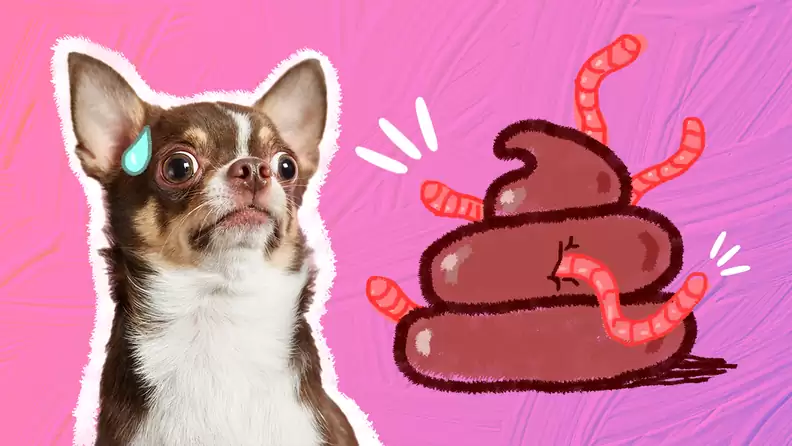
Why Does My Dog Poop Have Worms?
Seeing “worms” in your dog’s poop almost always means your dog has an intestinal parasite infection. Here’s what’s going on, why it happens, and what to do next.
1. What you’re probably seeing
| Appearance in Stool | Most Likely Culprit | How Dogs Pick It Up |
|---|---|---|
| Spaghetti‑like strands (2–7 in / 5–18 cm) | Roundworms (Toxocara, Toxascaris) | Ingesting contaminated soil, feces, or prey; puppies can get them in utero or through mom’s milk |
| Grain‑of‑rice segments that wiggle, or dried “sesame seeds” stuck to fur | Tapeworms (Dipylidium, Taenia) | Swallowing an infected flea or eating raw rodents/rabbit meat |
| Red, thin, hair‑like worms (½–¾ in / 1–2 cm) | Hookworms | Larvae penetrate skin or are swallowed in contaminated environments |
| Short, thread‑like worms, sometimes with a thicker tail end | Whipworms | Ingesting microscopic eggs in soil or on objects |
2. Why it matters
- Health risks to your dog: diarrhea, vomiting, weight loss, anemia, “pot‑belly” appearance in pups, dull coat, poor growth. Heavy hookworm or whipworm loads can be life‑threatening.
- Risks to people: Some roundworms and hookworms are zoonotic—they can infect humans, especially children, causing serious eye or skin disease.
- Environmental contamination: Each worm can shed thousands of microscopic eggs daily; these stay viable in soil for months to years.
3. What to do right now
- Call your veterinarian. Bring a fresh stool sample so they can identify the exact parasite and prescribe the correct de‑wormer (they’re not all the same). Commercial over‑the‑counter “broad spectrum” products often miss certain worms or require repeat dosing at specific intervals.
- Start treatment immediately and follow the full schedule—usually an initial dose plus one or two follow‑ups to kill hatching larvae.
- Disinfect home & yard:
- Pick up every pile promptly and seal in plastic.
- Wash bedding on hot.
- Vacuum and mop high‑traffic floors.
- Treat fleas if tapeworm segments are present—flea control breaks the tapeworm life cycle.
4. Preventing another round
- Year‑round broad‑spectrum parasite preventives (many monthly heartworm meds also protect against round‑, hook‑ and whipworms).
- Strict flea control (topical or oral).
- No raw meat or scavenging.
- Regular fecal exams (at least once a year; twice for puppies).
- Yard hygiene: quick waste pickup, keep sandboxes covered, discourage wildlife and rodents.
- Handwashing—important for kids after outdoor play.
When to seek urgent care
- Bloody or black‑tarry stool
- Severe diarrhea or vomiting
- Lethargy, pale gums, rapid weight loss (especially in puppies or seniors)
With prompt veterinary treatment and good hygiene, most dogs recover quickly and you’ll break the re‑infection cycle.