Best Dog Breeds for the Las Vegas Climate: What Dogs Handle the Heat Best?
Living in Las Vegas comes with plenty of advantages for dog owners. There are plenty of parks, walking trails, pet-friendly neighborhoods, and outdoor activities to enjoy with your four-legged companion.
But there is one major consideration for anyone who owns or is thinking about getting a dog in Southern Nevada: the heat.
Las Vegas summers can be extremely hot, and the desert environment can be challenging for dogs that aren’t well suited to high temperatures. While virtually any dog can live happily in Las Vegas with proper care, some breeds naturally handle warm weather better than others.
So, what breed of dog does the best in the Las Vegas climate?
There isn’t one perfect breed for every household, but dogs with short coats, lean builds, longer muzzles, and origins in warm climates generally have advantages when dealing with heat. The American Kennel Club specifically identifies breeds such as the Australian Cattle Dog, Basenji, Chihuahua, Dalmatian, German Shorthaired Pointer, Greyhound, Ibizan Hound, Whippet, and Xoloitzcuintli as breeds that can do well in hot weather.
This guide looks at some of the best dog breeds for Las Vegas, North Las Vegas, and Henderson, along with important information every Southern Nevada dog owner should know about keeping pets safe during the summer.
What Makes a Dog Good for the Las Vegas Climate?
Not every dog handles heat the same way.
Several characteristics can affect how comfortable a dog is in hot weather.
- Coat length
- Coat density
- Body size
- Body composition
- Muzzle shape
- Activity level
- Age
- Overall health
- Ability to access shade and water
Dogs with short or fine coats and lean bodies generally have an advantage in warm climates. Breeds originating from hot regions can also be naturally adapted to higher temperatures.
However, being considered a “hot-weather breed” doesn’t mean a dog can safely spend hours outside in Las Vegas summer temperatures.
Every dog needs protection from extreme heat.
1. Chihuahua
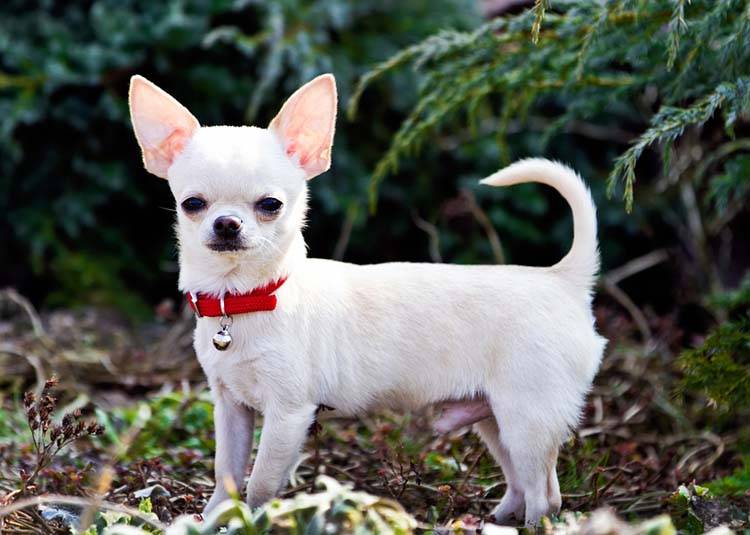
If you’re looking for a small dog that can adapt well to the desert environment, the Chihuahua is one of the breeds worth considering.
The Chihuahua originated in Mexico, and the smooth-coated variety has a short coat that doesn’t hold as much heat as a heavy, dense coat.
The AKC specifically lists the Chihuahua among breeds that tend to do well in hot weather.
Chihuahuas can also be convenient for Las Vegas residents living in apartments, condos, or smaller homes.
However, their small size doesn’t make them immune to heat.
In fact, small dogs can be particularly vulnerable when walking close to hot pavement because their bodies are closer to the ground.
Best for:
- Apartments
- Smaller homes
- Indoor-focused families
- Owners who want a small companion
- Short walks during cooler parts of the day
2. Basenji
The Basenji is another interesting choice for Las Vegas.
Originally from Central Africa, the Basenji has a short, fine coat and an athletic build.
Its origins in a hot climate are one reason the breed is often considered well suited to warm weather.
The AKC includes the Basenji among its recommended hot-weather breeds.
Basenjis are intelligent, athletic, and independent.
They aren’t necessarily the easiest breed for every first-time dog owner, so personality and lifestyle should be considered along with climate.
Best for:
- Active owners
- Experienced dog owners
- People who enjoy training
- Families looking for an athletic dog
3. Greyhound
The Greyhound may be one of the most naturally heat-friendly larger breeds.
Greyhounds have extremely short coats and lean bodies.
Their body structure allows them to dissipate heat more effectively than many heavily coated breeds.
The AKC lists Greyhounds among breeds that can do well in hot weather.
Despite their reputation as racing dogs, Greyhounds often enjoy relaxing indoors.
This can make them surprisingly good companions for Las Vegas homes—as long as owners provide appropriate exercise during cooler hours.
Best for:
- Families wanting a larger dog
- Indoor households
- Owners who want a relatively low-maintenance coat
- People who can provide controlled exercise
4. Whippet
The Whippet is essentially a smaller relative of the Greyhound.
It has a very short, thin coat and an athletic body.
Those characteristics can make the Whippet a good choice for warm climates.
The AKC specifically includes Whippets among breeds that tolerate hot weather well.
Whippets can be energetic when exercising but comfortable relaxing indoors afterward.
For Las Vegas families, this combination can be appealing.
Best for:
- Active families
- Homes with indoor cooling
- Owners who enjoy walking and running during cooler weather
- People wanting a medium-sized athletic dog
5. Australian Cattle Dog
The Australian Cattle Dog was developed in Australia and is accustomed to working in warm conditions.
The AKC identifies the breed as one that can do well in hot weather and notes its Australian origins and working history.
These dogs are intelligent, energetic, and hardworking.
That can be both an advantage and a challenge in Las Vegas.
They may tolerate heat better than some breeds, but they still need responsible exercise scheduling.
An Australian Cattle Dog should not be expected to run around outside during the hottest part of a Las Vegas afternoon.
Best for:
- Active owners
- Larger yards
- People who enjoy training
- Owners looking for an energetic working breed
6. Dalmatian
The Dalmatian has a short coat and athletic body, making it another breed that can be well suited to warm weather.
The AKC includes Dalmatians on its list of breeds that do well in hot climates.
Dalmatians are energetic and require regular activity.
In Las Vegas, however, exercise should be planned carefully around the weather.
Morning walks, evening walks, indoor play, and controlled activities can be much safer than exercising in the middle of a hot afternoon.
7. German Shorthaired Pointer
The German Shorthaired Pointer, commonly called a GSP, has a short coat and athletic build.
The breed is energetic and was developed as a versatile sporting dog.
The AKC lists the German Shorthaired Pointer among breeds that can handle hot weather.
For an active Las Vegas family, a GSP can be an excellent companion.
However, the breed’s high energy level means owners need to be particularly careful about exercise in extreme heat.
A dog may be willing to keep running even when the conditions are unsafe.
8. Xoloitzcuintli
The Xoloitzcuintli, sometimes called the Mexican Hairless Dog, is another breed with strong connections to a warm climate.
Xolos can be hairless or coated and come in multiple sizes.
The AKC identifies the Xoloitzcuintli as a breed suited to hot weather.
There is an important catch, however.
Hairless dogs can be more susceptible to sunburn.
That means a Xolo may handle heat well but still require careful protection from direct sunlight.
9. Ibizan Hound
The Ibizan Hound originated around the Mediterranean and has a short or wire-haired coat.
Its athletic, lean body and large upright ears are among the characteristics that make it suitable for warm conditions.
The AKC includes the Ibizan Hound among its hot-weather breed recommendations.
This is another breed that can be a good option for active households that understand the importance of exercising during cooler periods.
10. Italian Greyhound
The Italian Greyhound is a small, elegant breed with a very short, close-fitting coat.
Like other Greyhound-type dogs, its body structure can make it relatively comfortable in warm conditions.
The breed appears on the AKC’s list of dogs that can tolerate hot weather.
Because Italian Greyhounds are small, owners still need to pay attention to hot pavement.
Their proximity to the ground can increase exposure to heated surfaces.
What About Labrador Retrievers in Las Vegas?
Labrador Retrievers are extremely popular dogs, including in Las Vegas.
In fact, the AKC’s 2025 city data lists the Labrador Retriever among Las Vegas’ five most popular dog breeds.
But popularity doesn’t necessarily mean a breed is ideal for desert heat.
Labs have a dense double coat and can be more vulnerable to overheating than dogs with very short, fine coats.
That doesn’t mean a Labrador can’t live happily in Las Vegas.
Thousands of them do.
It simply means owners need to be especially responsible about:
- Exercise times
- Hydration
- Air conditioning
- Shade
- Grooming
- Weight management
- Hot pavement
What About Golden Retrievers?
Golden Retrievers are another extremely popular Las Vegas dog.
The AKC’s 2025 data lists the Golden Retriever as one of the city’s most popular breeds.
But Golden Retrievers have thick coats, so they require additional consideration during extreme heat.
A Golden Retriever can absolutely live in Las Vegas, but summer exercise should be carefully managed.
And owners should not assume that shaving a double-coated dog will solve the problem.
The AKC explains that a healthy coat provides insulation and that shaving a double-coated breed can remove that protective layer and potentially create additional problems.
What About Huskies?
The Siberian Husky is a beautiful and athletic dog, but it is not one of the breeds I’d put at the top of a list for the Las Vegas climate.
Northern breeds are generally better adapted to cooler conditions.
The AKC notes that Northern breeds such as Siberian Huskies thrive in colder climates.
That doesn’t mean a Husky can’t live in Southern Nevada.
It means owners should expect to put more effort into keeping one comfortable during the summer.
For a Las Vegas Husky, air conditioning, shade, water, controlled exercise, and careful heat management are essential.
What About French Bulldogs and Other Flat-Faced Dogs?
This is one of the most important considerations when choosing a dog for Las Vegas.
Flat-faced or brachycephalic breeds can have significantly more difficulty dealing with heat.
Examples include:
- French Bulldogs
- English Bulldogs
- Pugs
- Boston Terriers
- Some other short-muzzled breeds
Their shortened airways can make panting less effective.
The AKC specifically warns that brachycephalic dogs are at increased risk of overheating because their anatomy makes cooling themselves more difficult.
This doesn’t mean you cannot own one in Las Vegas.
It does mean that extreme caution is necessary.
Interestingly, French Bulldogs and Bulldogs are among the most popular breeds in Las Vegas according to AKC’s 2025 city data.
So if you already have one, don’t panic—just be extremely careful about heat exposure.
Best Dog Breed for Las Vegas: Our Top Choices
If the primary consideration is heat tolerance, several breeds stand out.
Best Overall Small Dog: Chihuahua
The Chihuahua’s Mexican origins and short coat make it one of the better small-dog options for desert living.
Best Athletic Dog: Australian Cattle Dog
An energetic breed with a history of working in Australia’s warm climate.
Best Large Heat-Tolerant Dog: Greyhound
Its lean body and very short coat make the Greyhound one of the more interesting large-dog options for Las Vegas.
Best Medium Athletic Dog: Whippet
A short-coated, athletic breed that can do well in warm weather when exercised responsibly.
Best Unique Choice: Xoloitzcuintli
A Mexican breed available in hairless and coated varieties, although hairless individuals require sun protection.
The Most Important Thing Isn’t Breed
While breed matters, management matters even more.
A Chihuahua can suffer heatstroke.
A Greyhound can suffer heatstroke.
A Labrador can suffer heatstroke.
A Husky can suffer heatstroke.
A French Bulldog can suffer heatstroke.
Every dog can become dangerously overheated.
The AKC notes that heatstroke can progress rapidly and cause serious organ damage or death.
That’s why choosing a heat-tolerant breed doesn’t eliminate the need for responsible summer care.
Las Vegas Dogs Need Air Conditioning
One of the biggest advantages for dogs living in Las Vegas homes is air conditioning.
During the hottest part of summer, your dog’s primary environment should generally be a cool indoor space.
Don’t assume that because a breed handles heat relatively well, it can comfortably stay outside all afternoon.
Shade alone may not be enough during extreme temperatures.
Fresh water and a cool environment are critical.
Exercise Your Dog Early in the Morning
One of the simplest ways to protect a dog from Las Vegas heat is changing the time of day you exercise.
Instead of taking a long walk at 2 p.m., consider going early in the morning.
Evening walks can also be preferable once temperatures and pavement have cooled sufficiently.
This is particularly important for athletic breeds such as:
- Australian Cattle Dogs
- German Shorthaired Pointers
- Dalmatians
- Whippets
- Greyhounds
Watch Out for Hot Pavement
Las Vegas sidewalks and roads can become dangerously hot.
The temperature of the air isn’t the only concern.
The ground can become hot enough to burn a dog’s paw pads.
The AKC recommends taking particular caution when temperatures reach around 85°F and remain elevated, noting that dogs may be safer indoors or in cooled environments.
A simple test is to place the back of your hand against the pavement.
If it’s too hot for your hand, it’s too hot for your dog’s paws.
Better yet, schedule walks when the pavement is cooler.
Signs Your Dog May Be Overheating
Every Las Vegas dog owner should recognize the warning signs.
Potential signs of overheating include:
- Excessive panting
- Excessive drooling
- Weakness
- Lethargy
- Red gums
- Vomiting
- Collapse
- Difficulty breathing
Heatstroke is a medical emergency.
The AKC explains that heatstroke can cause serious internal damage and can become fatal without prompt treatment.
If you believe your dog is experiencing heatstroke, seek emergency veterinary care immediately.
Never Leave a Dog in a Car
This rule applies regardless of breed.
Never leave your dog unattended in a parked car.
Not with the windows cracked.
Not in the shade.
And Not “just for five minutes.”
The temperature inside a vehicle can rise extremely quickly, even when the outside temperature doesn’t seem dangerously high.
In Las Vegas, this is especially important.
Provide Plenty of Fresh Water
Dogs need consistent access to fresh water during hot weather.
Make sure your dog has access to water both indoors and outdoors.
If you’re going for a walk, bring water with you.
For longer outdoor activities, plan frequent breaks.
Hydration is one of the simplest and most important ways to help your dog manage heat.
Shade Is Important—but It Isn’t Everything
If your dog spends time outside, shade is essential.
But in extreme Las Vegas temperatures, shade alone may not provide enough protection.
Also, A shaded patio can still become extremely hot.
And During the worst summer heat, the safest option is usually a cool indoor environment.
Don’t Shave Double-Coated Dogs
Many owners assume that shaving a thick-coated dog will help it survive the summer.
According to the AKC, that’s not necessarily true.
Also, A dog’s coat provides insulation and helps regulate temperature. Shaving a double-coated dog can remove that protective layer and may create problems with regrowth.
Instead, regular grooming and removal of loose undercoat can be more appropriate.
Furthermore, Talk to your veterinarian or a qualified groomer about your specific dog’s coat.
The Best Dog for Las Vegas Depends on Your Lifestyle
And Heat tolerance shouldn’t be the only factor you consider when choosing a dog.
You should also think about:
- Exercise needs
- Size
- Temperament
- Training requirements
- Grooming
- Energy level
- Apartment vs. house
- Time available
- Other pets
- Children
- Veterinary needs
For example, an Australian Cattle Dog may handle warm weather well but require far more mental and physical stimulation than a Greyhound.
A Chihuahua may be better suited to an apartment but may not be the right choice for someone wanting a running companion.
Also, The “best” breed is ultimately the one that fits both your lifestyle and the Las Vegas environment.
Best Dogs for Las Vegas: Quick Comparison
| Breed | Heat Tolerance | Energy Level | Coat | Las Vegas Considerations |
|---|---|---|---|---|
| Chihuahua | High | Moderate | Short | Great small-dog option; protect from hot pavement |
| Basenji | High | High | Short | Athletic and independent |
| Greyhound | High | Moderate | Very short | Excellent heat-friendly larger breed |
| Whippet | High | Moderate/High | Very short | Good for active owners |
| Australian Cattle Dog | High | Very high | Short/double | Needs exercise and mental stimulation |
| Dalmatian | High | High | Short | Exercise during cooler hours |
| German Shorthaired Pointer | High | Very high | Short | Excellent athletic option with careful heat management |
| Xoloitzcuintli | High | Moderate | Hairless/coated | Hairless dogs need sun protection |
| Labrador Retriever | Moderate | High | Double | Can live in Vegas but needs careful heat management |
| Golden Retriever | Moderate | High | Double | Requires cooling and responsible exercise |
| Siberian Husky | Lower | High | Thick double | Requires significant heat-management precautions |
| French Bulldog | Low | Moderate | Short | High heat risk due to brachycephalic anatomy |
What Breed Does Best in the Las Vegas Climate?
If we had to narrow the list down based specifically on heat tolerance, the Greyhound, Chihuahua, Basenji, Whippet, Australian Cattle Dog, and Xoloitzcuintli are among the strongest candidates.
The AKC specifically identifies these breeds as well suited to hot weather based on characteristics such as coat type, body structure, and origins in warmer regions.
But there is an important distinction:
Also, The best dog for Las Vegas isn’t necessarily the dog that tolerates heat the best.
It’s the dog that fits your lifestyle while receiving the care necessary to stay safe in the desert climate.
Conclusion
Best dog breeds Las Vegas
Las Vegas can be a wonderful place to own a dog, but Southern Nevada’s heat requires responsible pet ownership.
And If you’re choosing a new dog, breeds with short coats, lean bodies, and longer muzzles generally have advantages in warm weather.
The Greyhound, Chihuahua, Basenji, Whippet, Australian Cattle Dog, Dalmatian, German Shorthaired Pointer, and Xoloitzcuintli are all worth considering for families living in Las Vegas, North Las Vegas, or Henderson.
Also, At the same time, popular breeds such as Labradors, Golden Retrievers, Huskies, and French Bulldogs can also live in Southern Nevada with the right care—but owners need to understand their individual heat risks.
Ultimately, water, air conditioning, shade, appropriate exercise times, weight management, and attention to heatstroke symptoms are more important than simply choosing a “heat-tolerant” breed.
And If you already own a dog, you don’t need to move or replace your pet because of the Las Vegas climate. With thoughtful management, many different breeds can live happy, healthy lives in Southern Nevada.
- What dog breeds do best in the Las Vegas climate? Discover the best heat-tolerant dog breeds for Las Vegas, North Las Vegas, and Henderson.
- Looking for the best dog breed for Las Vegas? Learn which breeds handle hot desert weather best and how to keep your dog safe in the heat.
- Discover the best dog breeds for Las Vegas heat, including Greyhounds, Chihuahuas, Basenjis, Whippets, and Australian Cattle Dogs.
- Which dogs do best in Las Vegas weather? Explore heat-tolerant breeds and important summer safety tips for dogs in Southern Nevada.
- Find the best dogs for the Las Vegas climate, from small Chihuahuas to Greyhounds, Whippets, Basenjis, and other heat-tolerant breeds.
- Learn which dog breeds are best suited for hot Las Vegas summers and how owners in Henderson and North Las Vegas can protect their pets.
- Choosing a dog in Las Vegas? Discover heat-tolerant breeds and learn how water, shade, air conditioning, and safe exercise protect dogs from heat.
- What is the best dog for Las Vegas? Compare heat-tolerant dog breeds and learn how to safely care for pets in the Southern Nevada desert.
- Explore the best dog breeds for hot weather in Las Vegas, including short-coated, athletic breeds that can better tolerate desert temperatures.
- Find out which dog breeds do best in Las Vegas, North Las Vegas, and Henderson and learn essential tips for protecting dogs from extreme heat.
Best dog breeds Las Vegas
- Best dog breeds Las Vegas
- Dogs for Las Vegas
- Best dogs for hot weather
- Heat tolerant dog breeds
- Las Vegas dog breeds
- Dogs in Las Vegas
- Hot weather dogs
- Desert dog breeds
- Dog breeds for heat
- Las Vegas pets
- Best dog breed for Las Vegas climate
- Best dogs for Las Vegas heat
- Dog breeds that do well in Las Vegas
- Best dog breeds for hot weather Las Vegas
- Heat tolerant dog breeds for Las Vegas
- Best dogs for desert climate Nevada
- Best dog breeds for Las Vegas summers
- Dogs that handle Las Vegas heat
- Best dog breeds for Henderson NV climate
- Best dog breeds for North Las Vegas weather
Best Dog Breeds for the Las Vegas Climate
When choosing a dog for Las Vegas, North Las Vegas, or Henderson, consider both the breed’s heat tolerance and whether its temperament, energy level, size, and care requirements fit your household.
For more information about dog health and breed characteristics, the American Kennel Club’s hot-weather guidance is a useful resource. AKC: Best Dog Breeds for Hot Weather
And remember: even the most heat-tolerant dog can overheat in Las Vegas. Proper hydration, shade, air conditioning, and avoiding extreme heat are essential for every breed.