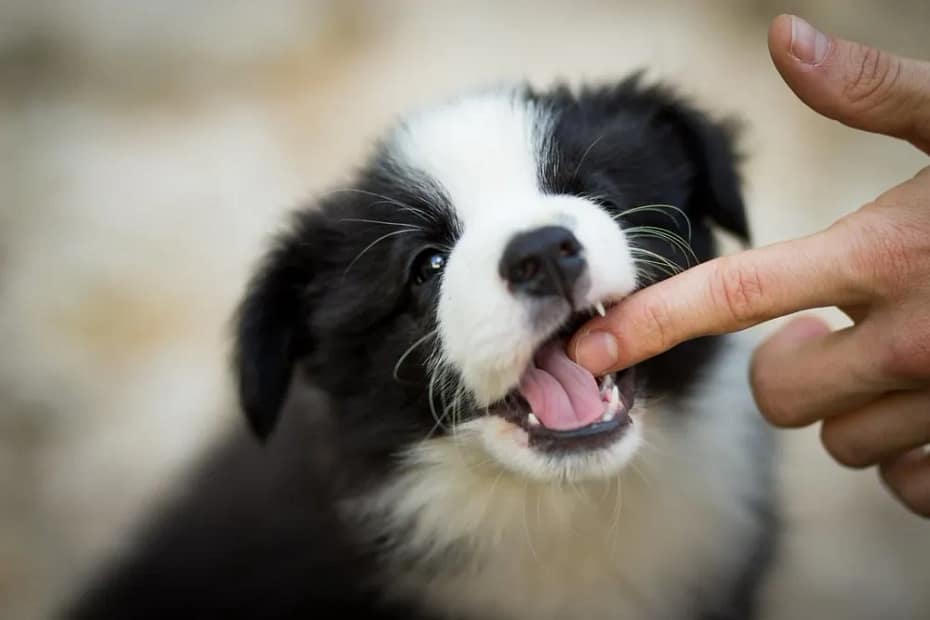
Puppy biting is totally normal — they explore the world with their mouths and teethe just like babies. But you absolutely want to teach them gentle manners early on. Here’s how to handle it:
???? 1. Redirect to Appropriate Toys
- Always have a puppy-safe chew toy handy.
- If your puppy starts biting you, calmly say “no” or “ouch!” in a firm (but not angry) voice, then immediately offer the toy instead.
- Praise them when they chew on the toy instead of you.
???? 2. Stop Play When Biting Happens
- If your puppy bites too hard during play, end the game for a moment.
- Stand up, turn away, or leave the room briefly.
- Puppies learn that biting makes the fun stop.
???? 3. Teach Bite Inhibition
- When a puppy bites too hard, make a loud, high-pitched “yelp!” like another puppy would — this mimics what littermates do.
- This teaches them to soften their bite, realizing it hurts you.
???? 4. Avoid Rough Play
- Wrestling or letting your pup tug on your hands encourages more biting.
- Instead, play with toys, flirt poles, or balls so they learn hands are off-limits.
???? 5. Soothe Teething Pain
- Offer frozen washcloths, puppy teething rings, or ice cubes to soothe sore gums.
???? 6. Be Consistent
- Make sure everyone in the family uses the same commands and rules.
- Inconsistency confuses your pup and slows training.
If the biting is aggressive (growling, lunging, stiff posture), or doesn’t improve by 4–6 months of age, consult a professional trainer or vet to rule out behavior or medical issues.