What Do Different Dog Poop Textures Mean?
The texture of your dog’s poop can reveal a lot about their health, diet, and digestive system. Here’s a breakdown of what different poop textures may mean:
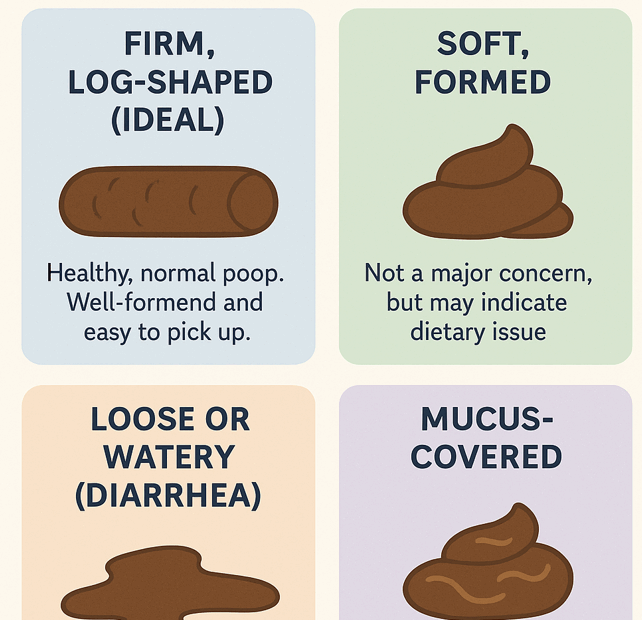
1. Firm, Log-Shaped (Ideal)
- What it means: This is healthy, normal poop. It should be shaped like a log, hold its form, and be easy to pick up.
- Likely causes: A balanced diet, proper hydration, and a healthy digestive system.
2. Hard and Dry
- What it means: Your dog may be dehydrated or lacking fiber.
- Possible causes: Not drinking enough water, too much bone in the diet (common in raw-fed dogs), or constipation.
3. Soft, Formed
- What it means: Not immediately concerning, but a sign that something in the diet may not be fully agreeing with them.
- Possible causes: Mild food intolerance, change in diet, or minor stress.
4. Loose or Watery (Diarrhea)
- What it means: Indicates an upset stomach or a gastrointestinal issue.
- Possible causes: Eating something inappropriate, parasites, food allergy, infection, or more serious illness.
5. Mucus-Covered
- What it means: Mucus is produced by the intestines to protect themselves, but too much indicates irritation.
- Possible causes: Inflammatory bowel disease, parasites, or dietary intolerance.
6. Greasy or Shiny
- What it means: Could be a sign of too much fat or a problem absorbing fat (malabsorption).
- Possible causes: Pancreatitis or high-fat diet.
7. Soft with Undigested Food
- What it means: Your dog might not be digesting food properly.
- Possible causes: Poor quality food, fast eating, or health conditions affecting digestion.
8. Small, Pebble-Like
- What it means: Often a sign of dehydration or constipation.
- Possible causes: Lack of moisture in the diet or insufficient fiber.
If abnormal poop textures last more than a couple of days, are accompanied by vomiting, lethargy, or blood, or change suddenly and drastically, it’s best to consult your vet.
At Rebel DK we are trained to know the differences and will alert our clients if anything is out of the ordinary.